
The Quiet Cost of Dominance in the Workplace
Many professionals experience subtle but persistent forms of dominance at work — being talked over, undermined, ignored, or made to feel invisible. These are not always loud or aggressive behaviours, but over time, they erode confidence, emotional safety, and contribution.
In most structured workplaces, you’re bound to encounter dominant personalities — people who assert control through tone, presence, or non-responsiveness. Some of this is driven by pressure, timelines, or unprocessed habits of leadership. But the emotional impact of these workplace power dynamics is especially strong for people who are more reflective or inward-facing.
Why Dominating Coworkers Can Be Emotionally Draining
Dominating behaviour doesn’t always come across as aggressive. It can be quiet but consistent — a dismissive tone, an interrupted sentence, a lack of acknowledgment. And when you’re exposed to this dynamic repeatedly, it affects more than how you communicate. It changes how you see yourself.
Here’s what it can trigger:
- A sense of powerlessness
- Internal shame — for not speaking up or for letting it continue
- Self-doubt — “Maybe I’m not clear enough” or “Maybe they’re right”
- Suppressed individuality — you start to shrink to avoid friction
Most advice on how to deal with dominating coworkers focuses on fixing the other person. But what’s often more effective and immediately available is learning to stay emotionally grounded within yourself.
What Helps: Mindful Tools to Stay Clear
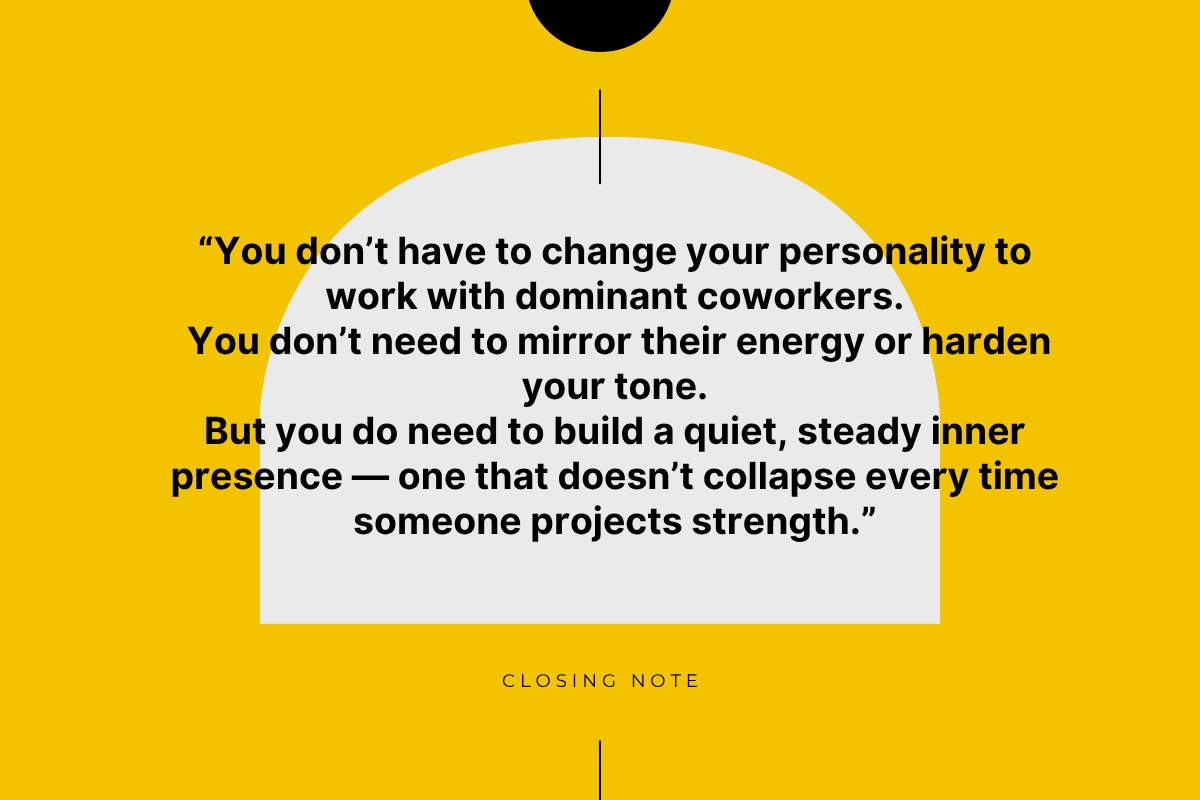
You may not be able to change a person’s behaviour. But you can change the emotional power it holds over you. These practices help you process, reset, and protect your inner space in the face of difficult dynamics.
- Compassion for the Dominant Personality
In mindfulness, the practice of metta (loving-kindness) encourages us to extend compassion even to those who trigger discomfort.
Silently repeat: “May you be free from your own pressure.”
Why it helps: This breaks the emotional loop of resentment. It reduces the grip their behaviour has on your mind — and reframes it as their struggle, not your shortcoming.
- Body Scan After Dominating Interactions
When you feel tense, undermined, or silenced, pause and scan your body — slowly, from head to toe. Find where the discomfort sits: your chest, jaw, shoulders.
Why it helps: This technique grounds you in the physical experience of the moment, not the mental story. It reminds you that discomfort is something you feel — not something you are.
- Practice Calm Assertiveness at Work
Speaking up is a skill. You don’t need to be loud — just clear and calm.
Try:
“I’d like to finish what I was saying.”
“Here’s what I think.”
Why it helps: Clear speech gently but firmly resets the tone. It shows that you’re present — and not easily pushed aside — without resorting to confrontation.
Disclaimer
This article is based on lived experiences and reflective practices. It’s not a substitute for therapy or mental health care. If you’re experiencing persistent distress or emotional fatigue at work, consider reaching out to a trusted therapist or counsellor. You don’t have to carry it alone.
This piece includes AI-assisted editing.